-
The views expressed herein do not constitute research, investment advice or trade recommendations, do not necessarily represent the views of all AB portfolio-management teams and are subject to change over time.
Small-Cap Stocks Are Stirring on Policy Shifts, Earnings Edge
5 min read
Are US small caps finally shaking off a decade of underperformance?
After years of trailing their large-cap peers, small-cap stocks have tested the patience of even seasoned investors. But we believe a dramatic improvement in earnings growth driven by lasting change in the US economy is creating sustainable recovery potential for small companies of all types.
Uncertainties over US tariff policies and GDP growth were especially strong headwinds for small-cap stocks to start 2025, given the asset class’s comparatively large ties to the US economy. But small caps surged since the second half, with the Russell 2000 Index up 22.0%, compared to 11.8% for the S&P 500, from July 2025 through February 27, 2026.
Similar rallies in previous years have fizzled out quickly. This time, we believe small cap’s notable comeback isn’t the typical “head fake” of past upticks but more the result of headwinds flipping to strong and possibly lasting tailwinds.
Small-Caps Benefiting from US Economic Transition
The US Supreme Court’s recent ruling against the Trump Administration’s use of certain tariffs has left trade policy again uncertain and markets somewhat volatile. But we believe investors who look past this near-term noise will see a powerful and positive US economic transition underway. After a tariff-related pause in 2025, the US economy’s renewed domestic focus has been a magnet for corporate investment.
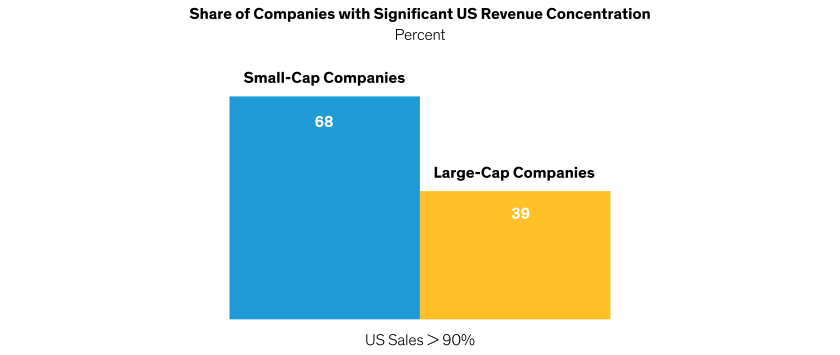
We believe small-cap companies stand to be the biggest beneficiaries of the US economy’s strengthening, given their relatively larger exposure to it. In fact, almost 70% of small-cap companies generate more than 90% of their sales domestically, compared to less than 40% for large companies (Display).
Small-Cap Revenues More Tied to US Economy
Current analysis does not guarantee future results.
Small-cap companies represented by the Russell 2000 Index; large-cap companies represented by the Russell 1000 Index
As of February 24, 2026
Source: Bloomberg, FTSE Russell and AllianceBernstein (AB)
Growing demand for new infrastructure, especially to upgrade supply chains and energy access, should also be supportive. Smaller companies, with their improved cost structures, will now be able to meet this demand on a more even footing with larger, globally focused companies, in our view.
Onshoring Levels the Field vs. Large Caps
We believe a new paradigm is emerging with the potential to undercut the stubborn dynamic that weighed on small-cap performance for the last decade. Globalization has long benefited mostly US large-cap companies, which naturally were better positioned to leverage lower operating costs and fast-growing markets overseas.
In a more domestically focused US economy, small caps aren’t as disadvantaged in terms of cost structure and market scale. In fact, the playing field is leveling as supply chains and trade patterns lean toward US products and manufacturing. US reliance on Chinese imports, for example, is about half of what it was in 2015, while more money than ever is going to factory construction stateside.
Moreover, US manufacturing has begun to show signs of recovery. The Institute for Supply Management’s Purchasing Managers Index reached 52.4 in February, the second consecutive month it has surpassed 50, which indicates expansion. The expanding economy will likely need significant investments, too, given that the American Society of Civil Engineers pegs the country’s infrastructure—from roads and bridges to water pipes and treatment plants—at near or past life expectancy.
We think the need for massive infrastructure investment—and the fact that domestic companies are becoming equipped and incentivized to step up—is another structural tailwind, especially for smaller industrial and tech firms overshadowed by the AI rush.
US Policy Also Supportive
Ongoing policy changes are also accelerating the US economic transition. The One Big Beautiful Bill Act (OBBBA), for instance, should pump significant fiscal stimulus into its economy in 2026 while the Fed’s expected course of lowering interest rates will also help.
Falling interest rates are powerful catalysts that lower the cost of variable debt, which is generally higher among small-cap companies (Display). Monetary policy easing could also free up more small-company loans, as banks tend to loosen lending requirements when debt becomes cheaper. History suggests that small-cap valuations tend to rise during Fed easing periods, and 12-month trailing price-to-earnings upticks are already underway since 2024.
Falling Rates Should Benefit Small-Cap Debt Expenses, Valuations

Current analysis does not guarantee future results.
LTM: last 12 months; P/E: price to earnings
As of December 31, 2025
Source: FTSE Russell, Strategas Research Partners and AB
As for the OBBBA, the legislation introduced more flexible guidelines for how and when businesses can depreciate equipment and real estate. This provision should be a boon to domestic manufacturers especially, since qualified production property is 100% deductible in the year it’s placed into service.
Sharper Earnings Edge Emerges
Evidence that small caps are benefiting is starting to surface in fundamental metrics. Earnings growth, for example, is expected to outstrip those for large companies in 2026, based on consensus forecasts, while revisions for US small-cap value stocks recently flipped positive (Display).
Small-Cap Earnings Showing Strength

Historical and current analyses do not guarantee future results.
Small-cap stocks represented by the Russell 2000 Value Index; large-cap stocks represented by the Russell 1000 Index
*The earnings revisions from the US Small Cap Value quantitative model. Calculated using the number of upward revisions minus the number of downward revisions, divided by the total of all revisions
Through December 31, 2025
Source: FTSE Russell, Strategas Research Partners and AB
Part of the upbeat outlook hinges on falling inflation, which has a larger impact on smaller companies than on large caps. As input costs such as wage pressures moderate, for instance, projected year-over-year small-cap earnings look more compelling. Moreover, small-cap earnings could be widely underestimated by the market, creating opportunities for selective growth and value investors alike.
Another reason for optimism: investor expectations for small caps remain very modest. While large-cap valuations, fueled by their concentration in high-flying technology stocks remain elevated, small-cap price-to-earnings multiples are hovering at historical averages of about 19x. At the same time, forward earnings growth rates between the two are almost neck and neck, which make small caps compelling given their much lower valuations, in our view.
Even after their recent bounce, small-cap valuations remain deeply discounted while showing vast improvements in earnings visibility for the first time in years. That’s a powerful combination, which we think can endure and reward selective investors, given small-caps’ access to an increasingly domestic-focused US economy.
Shifting winds have already stirred up the beginning of a rotation. But it’s not too late for investors to consider adding exposure to small caps, which can help diversify equity allocations in today’s rapidly changing market conditions.
-
Investment involves risk. The information contained here reflects the views of AllianceBernstein L.P. or its affiliates and sources it believes are reliable as of the date of this publication. AllianceBernstein L.P. makes no representations or warranties concerning the accuracy of any data. There is no guarantee that any projection, forecast or opinion in this material will be realized. Past performance does not guarantee future results. The views expressed here may change at any time after the date of this publication. This article is for informational purposes only and does not constitute investment advice. AllianceBernstein L.P. does not provide tax, legal or accounting advice. It does not take an investor's personal investment objectives or financial situation into account; investors should discuss their individual circumstances with appropriate professionals before making any decisions. This information should not be construed as sales or marketing material or an offer of solicitation for the purchase or sale of, any financial instrument, product or service sponsored by AllianceBernstein or its affiliates. This presentation is issued by AllianceBernstein Hong Kong Limited (聯博香港有限公司) and has not been reviewed by the Securities and Futures Commission.